

NCRRRI Launches Civic Tour Urging Congress to Update Section 4(b) Formula Restoring Section 5 Voting Rights Protections
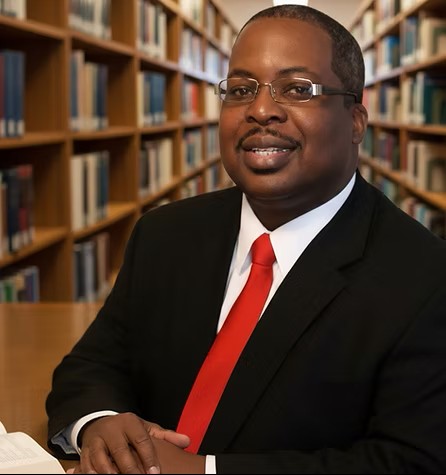
Joseph Baker, Founder NCRRRI
NCRRRI begins a national effort to document modern voting barriers and build the evidence Congress needs to restore federal preclearance protections.
Minority participation drives the industries shaping American life. Protecting the right to vote is essential to the nation’s democratic integrity and long‑term prosperity.”
HOUSTON, TX, UNITED STATES, October 7, 2026 /EINPresswire.com/ -- The National Civil Rights Research and Records Institute (NCRRRI) today announced a nationwide civic education tour to document modern voting barriers, develop community-based solutions, and build an evidence-based public record to support Congress in adopting an updated preclearance coverage formula under the Voting Rights Act of 1965.— Joseph Baker, Chancellor, NCRRRI
Through public forums in cities across the country, the tour will gather residents’ testimony, identify recurring barriers, connect affected communities with civic leaders and researchers, and develop a contemporary evidence base for practical reforms and congressional review.
A National Effort to Strengthen Federal Voting Protections
“The right to vote protects every other right,” said Chancellor Joseph Baker, NCRRRI Chairman. “Americans are confronting modern forms of disenfranchisement that require a modern response. Congress must adopt an evidence-based coverage formula that reflects current conditions and restores the federal preclearance protections envisioned by the Voting Rights Act.”
NCRRRI emphasized that voting discrimination has evolved rather than disappeared. Reported barriers include polling-place closures, restrictive identification requirements, sudden procedural changes, inadequate language access, discriminatory redistricting, and unequal access to voting technology. The Supreme Court’s 5–4 decision in Shelby County v. Holder (2013) did not invalidate Section 5 of the Voting Rights Act; it invalidated the Section 4(b) coverage formula that determined which jurisdictions were subject to federal preclearance. Without a valid coverage formula, Section 5’s preclearance process is inoperative. NCRRRI’s national tour will document current conditions and help build a public record to support congressional adoption of a new, evidence-based formula.
Legal Background: Section 5 After Shelby County v. Holder
The Institute’s announcement highlights the effect of the Supreme Court’s 2013 decision in Shelby County v. Holder, 570 U.S. 529, which invalidated the Section 4(b) coverage formula. Without that formula, Section 5—once a cornerstone of federal voting-rights enforcement—cannot operate as intended.
NCRRRI and its supporters are urging Congress to adopt a new, evidence-based coverage formula that reflects current conditions and restores federal review of voting-law changes in jurisdictions with documented patterns of discrimination.
Local Officials and Civic Leaders Join the Tour
NCRRRI announced the participation of the following local officials and civic leaders:
• LaWana Slack-Mayfield, At-Large Representative, Charlotte City Council
• Kenneth Barrios, community organizer, 33rd Ward Working Families, Chicago
• Rossana Rodriguez Sanchez, Alderwoman, Chicago’s 33rd Ward
• Kevin Robinson, Councilmember, Phoenix City Council District 6
• Leni Manaa-Hoppenworth, Alderwoman, Chicago’s 48th Ward
• Bennett R. Lawson, Alderman, Chicago’s 44th Ward
Additional cities, venues, and dates will be announced as scheduling is finalized. Local officials and community leaders can help strengthen civic confidence by listening to residents, improving access to public institutions, and translating community concerns into responsive policies and services.
Participation and Registration
City council members, other public officials, community activists, and organizers may register their interest. Participants may attend, observe, provide a written statement, or otherwise contribute to a forum. Written submissions may be preserved as part of the forum record. Each city announcement will include registration instructions and response deadlines.
Public Testimony: Documenting Lived Experiences
At each civic education forum, residents will receive information about voting rights and be invited to speak for three to five minutes about their experiences with voting barriers or other civil-rights concerns. Testimony may address protections under the Fourteenth and Fifteenth Amendments, the Voting Rights Act, and related federal laws. The forums are not legal proceedings and will not determine liability. Their purpose is to create a national record of lived experiences for NCRRRI to preserve and use in research, education, policy development, and congressional review.
NCRRRI’s Community-Development Power: From Issues to Solutions
NCRRRI brings more than awareness to each community it serves. Its community-development model gives residents, civic leaders, researchers, and elected officials a structured way to identify an issue, document its real-world impact, and advance a practical solution. By turning individual experiences into organized evidence and sustained civic action, NCRRRI helps communities move from being heard to being equipped for change.
The Issue
Communities often face voting barriers without a coordinated process to document patterns, connect residents with decision-makers, or translate local concerns into a record that can support policy reform.
The NCRRRI Solution
• Listen locally: Convene accessible forums where residents can describe barriers and priorities in their own words, respectfully and without intimidation.
• Document systematically: Preserve testimony and support records so recurring concerns become credible, usable evidence for local and federal policy design and reform.
• Connect stakeholders: Bring together residents, civic organizations, researchers, businesses, and public officials around shared priorities, including reducing health-care costs, removing political and economic barriers, stabilizing housing, improving support for seniors, and expanding access to polling places.
• Develop solutions: Translate documented needs into civic education, policy recommendations, leadership development, and community-based action plans.
• Sustain progress: Return knowledge, records, and practical tools to participating communities so residents and local organizations can continue to organize, advocate, implement solutions, and measure results beyond a single event.
Economic Case for Congressional Action
NCRRRI and its supporters urge Congress to recognize that restoring an effective Section 5 framework is both a constitutional priority and an economic concern. The United States is increasingly diverse, and Black, Hispanic, Asian American, Native American, and multiracial households participate across every major consumer market. Research has documented their substantial and growing buying power. NCRRRI argues that protecting equal access to the vote strengthens the democratic institutions communities, businesses, and financial markets depend on.
These voters are a permanent part of the nation’s political and economic life, yet they remain vulnerable to discriminatory redistricting and unequal voting access. NCRRRI maintains that Congress should establish a durable, evidence-based coverage formula that protects access to the ballot under current conditions and gives future generations a stronger foundation for civic participation and self-government. With more than 150 million minority residents—representing over 42 percent of the U.S. population—they drive economic activity across every major consumer market that Wall Street relies on for growth. With more than $5 trillion in annual buying power, minority consumers shape performance in the nation’s most influential industries.
Chancellor Joseph Baker
National Civil Rights Research and Records Institute
+1 800-701-3710
info@ncrrri.org
Legal Disclaimer:
EIN Presswire provides this news content "as is" without warranty of any kind. We do not accept any responsibility or liability for the accuracy, content, images, videos, licenses, completeness, legality, or reliability of the information contained in this article. If you have any complaints or copyright issues related to this article, kindly contact the author above.
